Organisational Behaviour Perth
Organisational behaviour in Perth determines whether your business performs well or struggles, yet most business owners never examine it consciously. As a consultant in Perth, we use Dynamic Alignment to engineer how your organisation actually behaves—not what your values statement says, but the real patterns of decision-making, accountability, communication, and cultural norms that drive daily performance. Most Perth business owners focus on strategy and systems while ignoring the behavioural patterns and cultural DNA that determine whether those strategies and systems actually work.

Behaviour.
Culture.
Performance.
What Organisational Behaviour Actually Means
Organisational behaviour is the systematic study of how individuals and groups act within an organization. But for consultants working with Perth businesses, it's more practical than academic. It's about understanding why your business behaves the way it does and changing those behaviours to improve performance.
Your organisational behaviour shows up in patterns. How quickly do decisions get made? Who actually has authority versus who just has titles? What happens when someone makes a mistake—do they hide it or discuss it openly? How do different departments interact? What gets celebrated and what gets ignored? These patterns determine performance far more than your strategic plan or your systems.
The four elements of organizational behavior are People, Structure, Technology, and Environment. People bring their attitudes, skills, and behaviours to work. Structure defines roles, reporting relationships, and decision-making authority. Technology includes the tools and systems people use. Environment covers market conditions, competitive pressures, and regulatory requirements. These elements interact to create your organisational behaviour.
Most business owners only focus on one or two elements. They hire better people or implement new technology and expect behaviour to change. But real transformation requires addressing all four elements and how they interact. That's what genetic engineering of organisational culture means—systematically reshaping the elements that drive behaviour.
For Perth businesses from Osborne Park to Joondalup, from Subiaco to Fremantle, understanding and managing organizational behavior is the difference between a business that performs consistently and one that depends entirely on the owner pushing everything forward constantly.
Dynamic Alignment of Organisational Behaviour
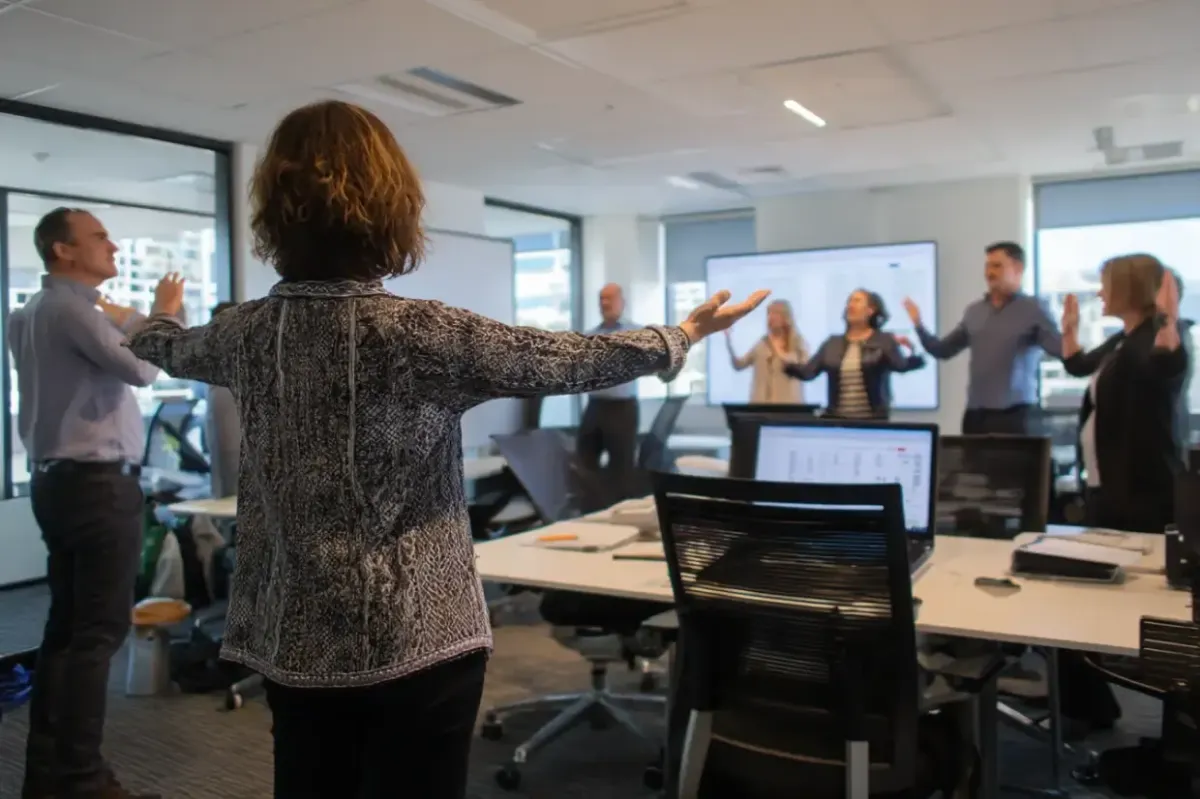
Dynamic Alignment means aligning every element of your organisation—roles, responsibilities, decision-making, communication, rewards, consequences—with the behaviours you need for performance. Most organisations have misalignment everywhere. Strategy says one thing, incentives reward something else, culture tolerates different behaviours entirely.
This misalignment creates the common organizational problems Perth businesses face. Absence of clear direction because nobody knows who decides what. Difficulty blending personalities because there's no framework for how people should interact. Failure to develop key competencies because learning isn't rewarded or supported. Poor communication because there's no clear process or expectation. Lack of awareness because feedback systems don't exist or don't work.
Dynamic Alignment addresses these problems systematically. First, we map current behavioural patterns—what actually happens versus what should happen. This reveals the misalignments. Then we redesign structures, clarify decision authority, adjust incentive systems, strengthen accountability, and reshape cultural norms to support desired behaviours.
This isn't about writing new policies or running team-building exercises. It's about engineering the organizational systems that drive behaviour. When decision authority is clear, decisions happen faster. When accountability is real, performance improves. When communication structures work properly, problems get solved instead of festering. When roles are properly designed, people can succeed without constant supervision.
The five models of organisational behaviour—autocratic, custodial, supportive, collegial, and system—represent different approaches to managing people. Most Perth businesses unconsciously operate in autocratic or custodial models (control-based or benefit-based). High-performing organisations operate in supportive, collegial, or system models (empowerment-based and team-based). Dynamic Alignment helps transition from low-trust, control-based models to high-trust, performance-based models.
Common Organisational Behaviour Challenges
The top workplace problems in Perth businesses usually stem from organisational behaviour issues, not technical or operational problems. Conflict and disagreements between staff happen when there's no clear process for resolving differences or when cultural norms reward aggression over collaboration. Workplace stress and burnout occur when expectations are unclear, resources are inadequate, or people feel they have no control over their work.
Poor organizational citizenship behaviours—the voluntary helpful actions people take beyond their job descriptions—indicate cultural problems. When people only do exactly what's required and nothing more, it signals they don't feel invested in the organisation's success. When they go above and beyond consistently, it shows strong organisational behaviour.
Job performance varies wildly in most organisations. Some people excel, others barely meet minimum standards, many fall somewhere in between. This variation often comes from unclear expectations, inconsistent accountability, or cultural norms that don't support high performance. The Big Five personality traits (openness, conscientiousness, extraversion, agreeableness, neuroticism) influence behaviour, but organisational systems determine whether those traits lead to productive or dysfunctional outcomes.
Absenteeism and turnover—the fourth key work behaviours—reveal organisational health. High absenteeism suggests people avoid work because the environment is unpleasant or stressful. High turnover indicates people leave because better options exist elsewhere. Both signal organisational behaviour problems that need addressing.
Perth businesses in Malaga, Canning Vale, West Perth, and across the metro area often treat these as people problems when they're actually system problems. Firing underperformers and hiring replacements doesn't fix organisational behaviour. Redesigning the systems that shape behaviour does.
Engineering Operating Culture
Operating culture is how your organisation actually functions day to day, not what you aspire to in your mission statement. It's the unwritten rules, the accepted behaviours, the real consequences for actions. Engineering operating culture means deliberately shaping these elements instead of letting them evolve randomly.
The three levels of organisational behaviour—individual, group, and organizational—all need attention. Individual level addresses personality, attitudes, perception, and motivation. Group level handles team dynamics, communication, leadership, and conflict. Organizational level manages structure, culture, change, and power dynamics. Most interventions only address one level, which is why they fail. Effective culture engineering addresses all three simultaneously.
The main goals of organisational behaviour work are to describe current behaviour accurately, understand why people behave as they do, predict future behaviour patterns, and control or develop human activity toward desired outcomes. This requires collecting data, analyzing patterns, testing interventions, and measuring results—not just guessing or implementing popular management theories.
Conflict resolution through organisational behaviour means creating systems where conflicts get resolved productively rather than destructively. The three C's—Collaboration, Compromise, and Communication—work when the organisational structure supports them. Without proper systems, collaboration is difficult, compromise feels like losing, and communication breaks down under pressure.
Five appropriate workplace behaviours that strong organisational cultures promote are accountability (people own their results), direct communication (issues get discussed openly), device discipline (technology serves work instead of distracting from it), professional conduct (behavior stays focused on work outcomes), and credit sharing (contributions get recognized appropriately). Perth businesses from Balcatta to Cannington that engineer these behaviours into their culture perform better than those that just hope people will behave well.
Investment in Organisational Behaviour Transformation
Organisational behaviour consultation investment varies based on organisation size, complexity, and the depth of cultural transformation required. Each Perth business has unique behavioural patterns and misalignments that need addressing—some require focused interventions, others need comprehensive cultural engineering, and many benefit from our full Dynamic Alignment approach.
We provide customised quotes based on your specific organisational challenges. The investment covers assessment of current behavioural patterns, identification of misalignments, design of Dynamic Alignment interventions, facilitation of culture engineering work, and ongoing guidance through the transformation process.
The work typically unfolds over 6 to 12 months. Rapid organisational behaviour changes rarely stick because people need time to adopt new patterns. The investment includes leadership sessions, behavioural assessments using frameworks like the Big Five personality model, design of new structural elements, implementation support, and measurement of behavioural changes.
Some consultants charge by the day for organisational behaviour work. We prefer engagement-based pricing because behavioural transformation isn't about time spent—it's about results achieved. The goal is lasting change in how the organisation functions, which requires sustained focus over months, not intensive work for a few days.
The return on investment shows up in multiple ways. Reduced conflict means less wasted time and energy. Improved organisational citizenship behaviours mean more gets done without constant management intervention. Better job performance across the team increases output and quality. Lower turnover and absenteeism reduce replacement costs and maintain continuity. These improvements compound over time as the new behavioural patterns become the normal way of operating.
For Perth businesses serious about transformation rather than temporary improvement, this level of investment in organisational behaviour work makes sense. If you're just looking for team-building activities or motivational speeches, those cost much less but deliver much less. If you want to fundamentally change how your organisation operates, that requires proper behavioural engineering and consultant-level expertise.

FAQ
What does organisational behaviour actually mean for Perth businesses?
Organisational behaviour is the systematic study of how individuals and groups act within an organization. For consultants working with Perth businesses, it's about understanding why your business behaves the way it does and changing those behaviours to improve performance. Your organisational behaviour shows up in patterns: how quickly decisions get made, who actually has authority versus who just has titles, what happens when someone makes a mistake, how departments interact, and what gets celebrated versus ignored. These patterns determine performance far more than your strategic plan or systems.
What are the four elements of organizational behavior?
The four elements of organizational behavior are People, Structure, Technology, and Environment. People bring their attitudes, skills, and behaviours to work. Structure defines roles, reporting relationships, and decision-making authority. Technology includes the tools and systems people use. Environment covers market conditions, competitive pressures, and regulatory requirements. These elements interact to create your organisational behaviour. Real transformation requires addressing all four elements and how they interact—that's what genetic engineering of organisational culture means.
What are the five models of organisational behaviour?
The five models of organisational behaviour are autocratic, custodial, supportive, collegial, and system—representing different approaches to managing people. Most Perth businesses unconsciously operate in autocratic or custodial models (control-based or benefit-based). High-performing organisations operate in supportive, collegial, or system models (empowerment-based and team-based). Dynamic Alignment helps transition from low-trust, control-based models to high-trust, performance-based models where employees feel invested in organisational success rather than just doing minimum requirements.
What is Dynamic Alignment of organisational behaviour?
Dynamic Alignment means aligning every element of your organisation—roles, responsibilities, decision-making, communication, rewards, consequences—with the behaviours you need for performance. Most organisations have misalignment everywhere: strategy says one thing, incentives reward something else, culture tolerates different behaviours entirely. Dynamic Alignment addresses common organizational problems by mapping current behavioural patterns, revealing misalignments, then redesigning structures, clarifying decision authority, adjusting incentive systems, strengthening accountability, and reshaping cultural norms to support desired behaviours.
What are common organisational behaviour challenges in Perth businesses?
Top workplace problems usually stem from organisational behaviour issues, not technical problems. Conflict between staff happens when there's no clear process for resolving differences or when cultural norms reward aggression over collaboration. Workplace stress and burnout occur when expectations are unclear, resources are inadequate, or people feel they have no control. Poor organizational citizenship behaviours—when people only do exactly what's required and nothing more—signal they don't feel invested in the organisation's success. High absenteeism and turnover reveal organisational health problems that firing underperformers won't fix.
How much does organisational behaviour transformation investment cost in Perth
Investment varies based on organisation size, complexity, and depth of cultural transformation required. Customised quotes are provided based on specific organisational challenges. The investment covers assessment of current behavioural patterns, identification of misalignments, design of Dynamic Alignment interventions, facilitation of culture engineering work, and ongoing guidance through the transformation process over 6-12 months. Return shows up through reduced conflict (less wasted time), improved organisational citizenship behaviours (more gets done without constant management), better job performance across the team, and lower turnover and absenteeism (reduced replacement costs).
Transforming How Your Organisation Actually Behaves
Organisational behaviour transformation requires acknowledging that how your organisation currently operates isn't working as well as it should. That's uncomfortable. It means admitting that problems aren't just about individual people failing—they're about systems and culture that don't support the behaviours you need.
Dynamic Alignment and operating culture engineering provide the framework for making real change. Not superficial change like new values posters on the wall, but fundamental shifts in how decisions get made, how accountability works, how people interact, and what behaviours the culture rewards or punishes.
Perth businesses that invest in proper organisational behaviour work see lasting improvements in performance, culture, and results. Those that skip this work and focus only on strategy or systems continue struggling with the same behavioural problems year after year. The difference is understanding that organisational behaviour isn't just about understanding people—it's about engineering the systems and structures that shape how those people act.
Why Perth Businesses Choose Perth Business Advisors
We're not interstate consultants flying in with generic advice. We're based in Perth, we understand WA markets, and we've built businesses here ourselves. From dealing with Perth's skills shortage to managing seasonal fluctuations in different industries, we get the local challenges. Our clients range from small family businesses to established companies with 20+ staff in manufacturing, trades, professional services, retail, and everything in between. What they have in common is wanting to run better businesses—more profitable, less stressful, and ready for growth.

Brett Rice
Managing Director
We are committed to helping Perth business owners run more profitable, more effective businesses. Whether you're looking to improve performance, prepare for sale, or build a stronger team.
Quick links


© Perth Business Advisors . 2026. All Rights Reserved.